
Fuel Dispensers
Fuel Dispensers: A Comprehensive Guide
Introduction:
Fuel dispensers, also known as gasoline or petrol pumps, are essential pieces of equipment at service stations and fueling facilities worldwide. These sophisticated machines are responsible for the precise measurement and delivery of liquid fuels to vehicles. More than just a simple pump, a fuel dispenser integrates intricate systems for flow measurement, safety, and data management. This guide delves into the various types, components, and functions that make modern fuel dispensers work.
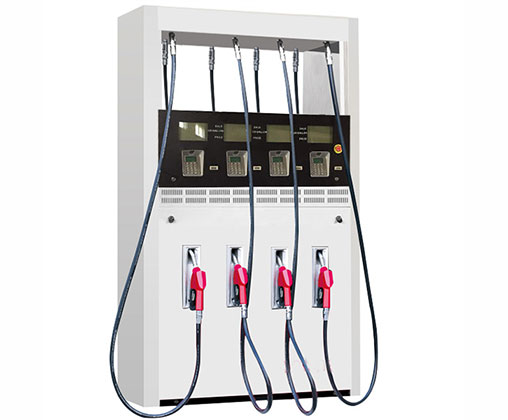
Types of Fuel Dispensers:
Fuel dispensers come in a variety of configurations, each designed to meet specific operational needs. The main classifications include:
By Display Type:
Mechanical Dispensers: These utilize analog dials and gears for displaying dispensed fuel volume and price. They are older technology but can be found in some older stations.
Electronic (Computerized) Dispensers: Modern standard with digital displays, these dispensers offer greater accuracy, data logging capabilities, and user-friendly interfaces.
By Number of Nozzles (Guns):
Single-Nozzle Dispensers: Designed for a single fuel type and a single dispensing point.
Dual-Nozzle Dispensers: Support the delivery of two fuel types or faster refueling for a single type by adding another nozzle.
Multi-Nozzle Dispensers: Capable of handling multiple fuel types from the same machine, often seen at large, busy stations.
By Pump Location:
In-Plane (Suction) Pump Dispensers: The pump unit is located within the dispenser's housing itself, drawing fuel from the underground storage tank. These are common but require a reliable suction system.
Submersible Pump Dispensers: These feature a pump immersed directly in the underground fuel tank. This provides more positive pressure and more efficient fuel delivery, especially at higher flow rates.
By Flow Rate:
Standard Dispensers: Provide a typical flow rate suitable for most cars and light-duty vehicles.
High-Speed Dispensers: Designed for faster refueling, they’re commonly used at truck stops, commercial fueling facilities, and for large vehicles.
By Explosion-Proof Design:
Integrated Explosion-Proof: The entire unit is designed to prevent the ignition of flammable vapors, with all the components inside a protected casing.
Isolated Explosion-Proof: Individual components are made with explosion-proof technology, allowing for easier maintenance and inspection.
Core Components & Their Functions:
A fuel dispenser is a complex device integrating multiple components working in unison. Here’s a closer look at the primary parts:
Computer Unit: The "brain" of the dispenser, this manages the overall operation. It receives the start signal from the nozzle switch, activates the pump and solenoid valves, reads signals from sensors, controls the display, and tracks data.
Fuel Pump: Provides the power for moving fuel from the storage tank to the vehicle. Driven by an electric motor, it pushes the fuel through the system.
Air-Separator/Gas Eliminator: This crucial component separates the fuel from any air or vapor, ensuring the accuracy of the fuel measurement. Any separated gas is released safely.
Flow Meter: The heart of fuel measurement, this device accurately quantifies the fuel being dispensed. It uses rotating parts to measure the volume of fuel passing through it and then sending the signal to the counting sensor.
Counting Sensor/Encoder: The pulse device translates the mechanical signals from the flow meter into an electrical signal. Modern dispensers often use high-precision encoders to prevent tampering and improve accuracy.
Solenoid Valves: These valves manage the flow of fuel at different flow rates. Controlled by the computer unit, they play a key role in controlling the amount of fuel dispensed with precision and improving the accuracy of the volume.
Fuel Nozzle (Gun): The dispensing tool which contains a shut-off mechanism to stop fuel flow when the tank is full, or when a pre-set volume is reached. This nozzle consists of a valve switch for activation and a self-sealing mechanism.
Nozzle Switch: This switch located on the nozzle’s handle sends a signal to the computer to begin the fueling process when the nozzle is extracted from the dispenser.
Enhanced Features and Advancements:
Modern fuel dispensers have many advances in technology, incorporating features such as:
Payment Systems: Integration with credit card readers, mobile payment platforms, and loyalty programs.
Data Logging and Reporting: Detailed records of transactions, inventory, and operational data for better management.
Remote Monitoring: Capability to monitor the dispenser’s status and performance remotely, improving uptime and efficiency.
Enhanced Safety Features: Advanced leak detection, emergency shut-off mechanisms, and anti-tampering systems.
Conclusion:
Fuel dispensers are crucial to the functioning of the modern world, facilitating the convenient and safe delivery of fuel for transportation needs. Understanding their different types and components can give valuable insights for both consumers and industry professionals. As the technology continues to advance, we can expect further innovations in accuracy, user experience, and environmental safety in the future.
Previous : Vaporizers
Next : How to deal with excessive pressure in LNG storage tanks


